The Last Light of Slabodka: Rabbi Avraham Grodzinski, 1883–1944
Seven photographs trace one life from the study halls of Lithuania to the ghettos of the Holocaust
The Last Light of Slabodka
In the early twentieth century, the suburb of Slabodka — across the river from Kovno (Kaunas), Lithuania — was home to one of the most influential institutions in the Jewish world. The Slabodka Yeshiva, formally known as Knesset Yisrael, was the crown jewel of the Mussar movement: a school of rigorous ethical self-examination that taught its students not merely what to know, but how to become.
At the center of this world, for over three decades, stood one man. Not the rosh yeshiva who lectured on Talmud, but the mashgiach ruchani — the spiritual director — whose role was to guide the inner lives of hundreds of young scholars. His name was Avraham Grodzinski.
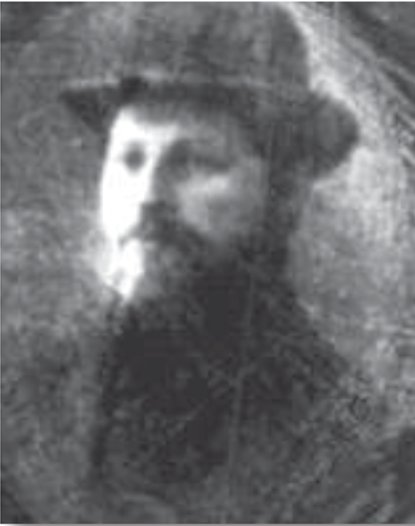
Rabbi Avraham Grodzinski in his youth
תר"ע-תרע"ה
A young Avraham Grodzinski, likely in his twenties or early thirties, photographed sometime between 1909 and 1915. He had already studied under Rabbi Nosson Tzvi Finkel — the legendary "Alter of Slabodka" — who recognized in him an unusual capacity for understanding the inner life of others. The Alter chose Grodzinski as his eventual successor, not for his brilliance in legal argument, but for his ability to see into the heart of a student and know exactly what that student needed to hear.
Grodzinski formally became mashgiach ruchani of Slabodka in 1924, following the Alter's death. But his real influence had begun years earlier. His approach was rooted in what the Slabodka school called "gadlut ha-adam" — the greatness of the human being. Where other yeshivot focused primarily on intellectual rigor, Slabodka insisted that every student was to be treated with the dignity of a king. A torn coat was not merely a matter of poverty; it was an affront to the divine image the student carried.
This was not sentimentality. It was a philosophy of radical human worth — the belief that ethical refinement was not secondary to Torah learning but inseparable from it. Grodzinski embodied this idea. Students recalled that he could deliver a mussar talk that left the room silent for hours, not through thunder and rebuke, but through a quiet insistence on seeing clearly what was already true about the human soul.
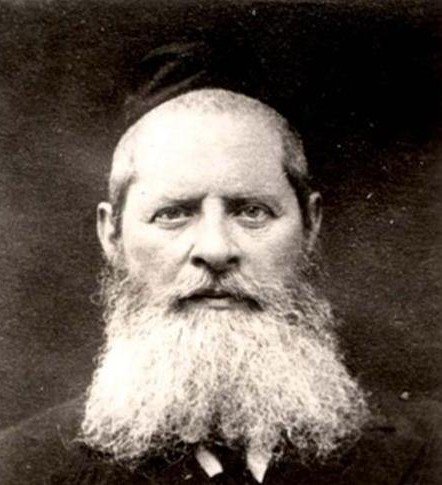
Rabbi Avraham Grodzinski
תר"צ-תרצ"ט
By the late 1920s, Grodzinski was one of the most respected figures in Lithuanian Jewry. This portrait, taken sometime between 1929 and 1939, shows the mashgiach at the height of his authority. His gaze carries the weight of a man responsible for hundreds of young souls — and aware that the world outside the yeshiva walls was growing darker by the year.
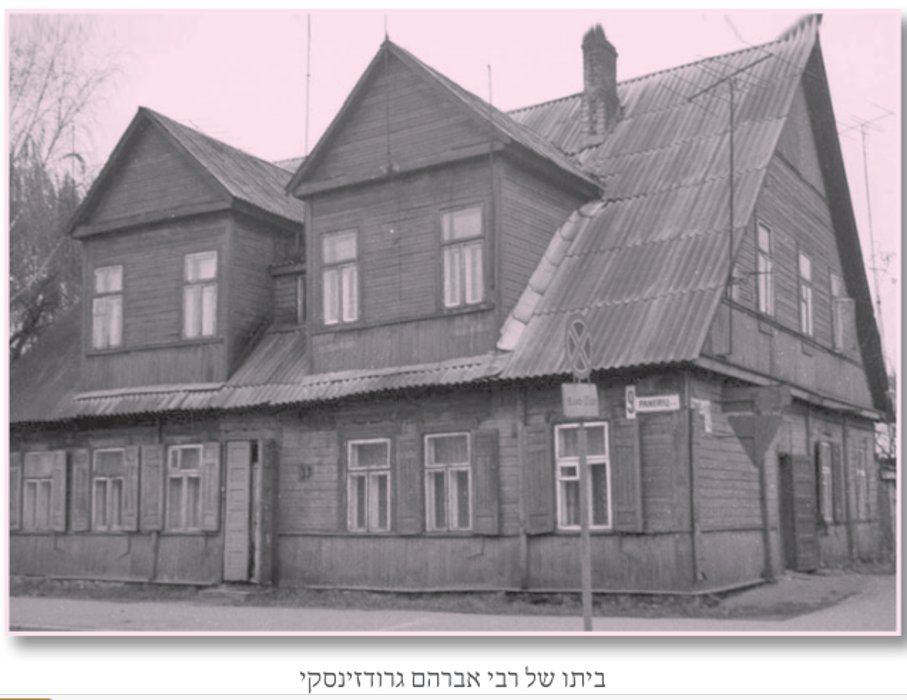
The Home of Rabbi Avraham Grodzinski
The home of Rabbi Avraham Grodzinski in Slabodka. Nothing grand — the Mussar movement taught that material simplicity freed the mind for spiritual work. This was the source documented in the book "Yachid V'doro" ("The Individual and His Generation"), a biographical work that preserved many details of his daily life. From this modest house he walked daily to the yeshiva that drew students from across Poland, Lithuania, Latvia, and beyond. The yeshiva was his world, and Slabodka was its geography.
Even Torah giants had bodies that needed care. On one side: Grodzinski at a health resort during bein hazmanim — the yeshiva recess between semesters, when even the most dedicated scholars took time for physical renewal. On the other: Grodzinski and his nephew Rabbi Avraham Pinchas Grodzinski at the Schönbrunn Palace in Vienna, where he had traveled for medical treatment. The book "Yachid V'doro" records this trip matter-of-factly, a reminder that behind every towering spiritual figure was a human body, subject to the same frailties as anyone else.
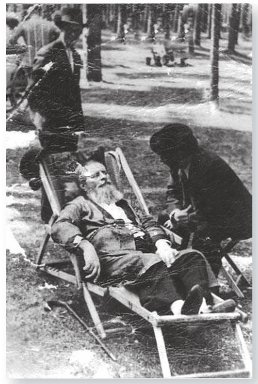
Rabbi Avraham Grodzinski in a Health Resort during the Time of the Intermediate Days
תר"צ-תרצ"ט
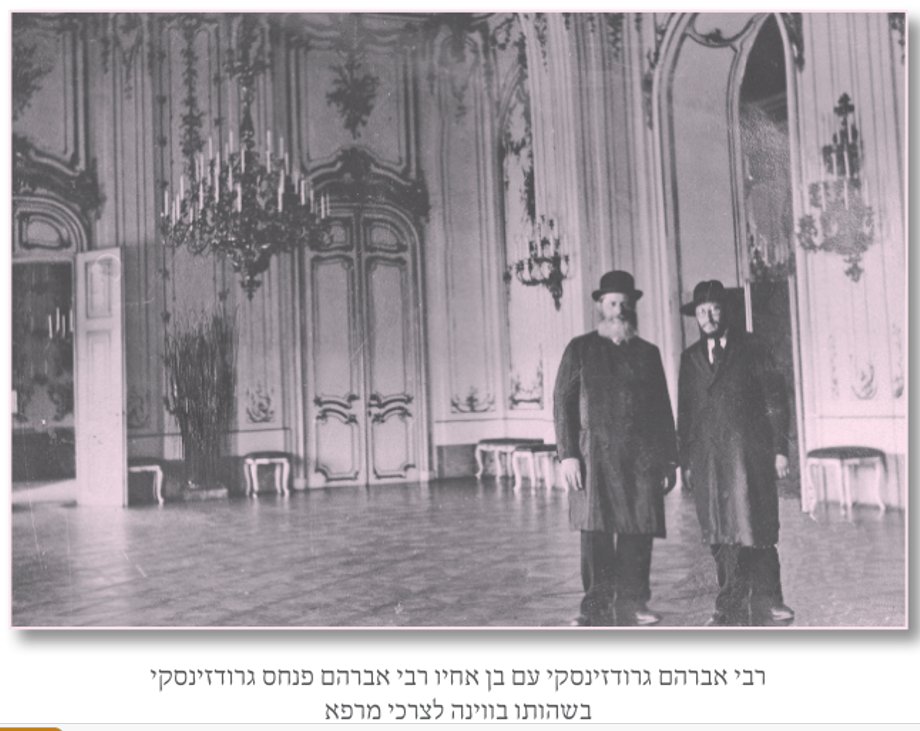
Rabbi Avraham Grodzinski and his nephew Rabbi Avraham Pinchas Grodzinski in the Schönbrunn Palace in Vienna
תר"צ-תרצ"ט
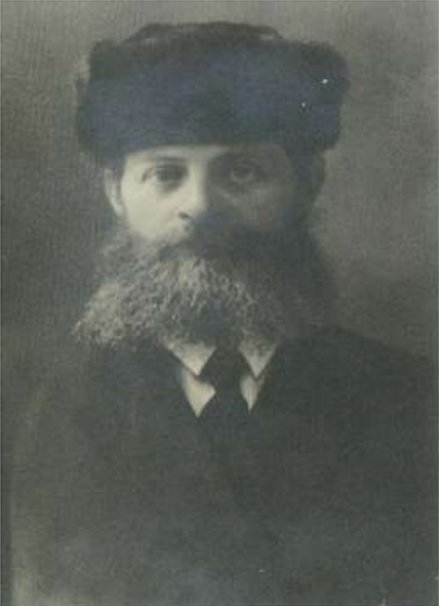
A second portrait of Grodzinski from the interwar period. By the late 1930s, the political situation in Lithuania was deteriorating rapidly. The Soviet occupation of 1940 had already disrupted the yeshiva, but what came next would be incomparably worse. In this photograph — likely one of the last taken before the war — Grodzinski looks out with the steady composure of a man who has spent a lifetime teaching others how to face whatever comes.
Rabbi Avraham Grudzenski
תר"צ-תרצ"ט
June 22, 1941
Germany invaded the Soviet Union on June 22, 1941. Lithuania fell within days. By August, the Jews of Kovno — some 30,000 men, women, and children — were forced into a ghetto in the Vilijampole district, on the very ground where the Slabodka Yeshiva had once stood.
The yeshiva ceased to exist as an institution. Its buildings were repurposed, its library scattered. But Grodzinski did not stop teaching. In the ghetto, amid hunger, forced labor, and periodic "actions" in which thousands were selected for murder, he continued to deliver mussar talks. Survivors later recalled that he spoke with the same quiet intensity he had always used — insisting on the dignity of the human soul even as the machinery around him was engineered to deny it.
He taught from the same principles he had always taught. But now the words carried a weight that no peacetime lecture ever could.
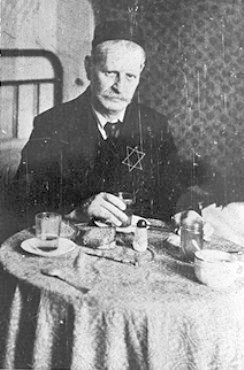
This photograph.
A rabbi who had spent his life teaching that every human being carries the image of God — photographed after the Nazis forced him to shave his beard. For an observant Jewish man, and especially for a rabbi of Grodzinski's stature, the beard was not decoration. It was identity. It was dignity. It was the visible mark of a life lived in devotion. Its forced removal was a deliberate act of humiliation, aimed not at the hair itself but at everything it represented.
Look at his eyes. The man who taught his students to see their own innate greatness now looks out from a face stripped of its most recognizable feature.
And yet — he continued teaching.
Rabbi Avraham Grodzinski, Spiritual Director at the Slabodka Yeshiva, After Being Forced to Shave His Beard in the Ghetto During the Holocaust
ת"ש-תש"א
Rabbi Avraham Grodzinski was murdered during the liquidation of the Kovno Ghetto in July 1944. He was sixty-one years old.
His final mussar talks, delivered in the ghetto between 1941 and 1944, were later reconstructed from the memories of the few survivors who had heard them. They were published under the title "Torat Avraham." In them, he returned again and again to the same theme he had taught his entire life: the infinite, indestructible value of every human soul.
The Slabodka Yeshiva was reestablished in 1944 in the Bnei Brak suburb of Tel Aviv by surviving students and faculty. It continues to operate today — one of the few pre-war Lithuanian yeshivot to have been successfully transplanted. The Mussar tradition that Grodzinski championed has experienced a significant revival in the twenty-first century, with study groups and institutions worldwide returning to its core insight: that the work of becoming fully human is never finished.
Seven photographs. One life. A world that was destroyed and a teaching that survived.